The word parody is widely used in entertainment, social media, literature, and everyday conversations. You may have seen parody videos online, heard someone describe a movie as a parody, or noticed jokes that imitate famous scenes. Understanding the parody meaning helps you recognize humor, creativity, and satire in different forms of content.
Parody is not just about making people laugh. It often carries deeper meaning by copying something familiar and presenting it in a humorous or exaggerated way. This makes parody both entertaining and thought-provoking.
What Does Parody Mean
Definition
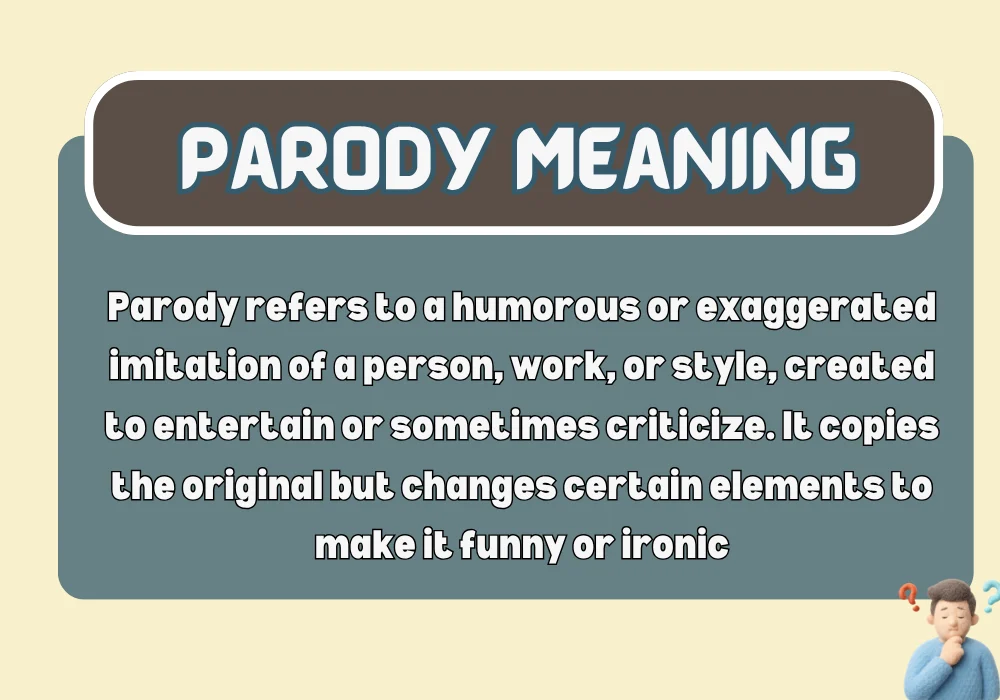
Parody refers to a humorous or exaggerated imitation of a person, work, or style, created to entertain or sometimes criticize. It copies the original but changes certain elements to make it funny or ironic.
At its core, parody is about imitation with a twist.
Origin and Background
The word parody comes from the Greek word parōidia, which means a song sung alongside another. Over time, it evolved to describe works that imitate others in a playful or mocking way.
Historically, parody has been used in:
- Literature
- Theatre
- Music
- Film
Today, it is especially popular on the internet and social media platforms.
Different Meanings of Parody Based on Context
Parody in Entertainment
In movies, TV shows, and music, parody refers to content that imitates another work for humor.
Examples include:
- A comedy movie copying a famous action film
- A song that mimics another artist in a funny way
Parody often exaggerates features to make the joke clear.
Parody in Social Media
And Parody is very common online, especially in:
- TikTok videos
- Instagram reels
- YouTube sketches
Creators often imitate celebrities, trends, or viral content in a humorous way.
Example:
A video copying a popular influencer’s style but exaggerating it for laughs.
Parody as Criticism or Commentary
Sometimes parody is used to highlight flaws or criticize something indirectly.
For example:
- Mocking political speeches
- Exaggerating social trends
- Imitating unrealistic movie scenes
In this sense, parody is not just funny but also meaningful.
Parody Meaning in Simple Language
In simple terms, parody means:
- Copying something in a funny way
- Making a joke by exaggerating
- Imitating for humor or message
It is often playful but can also carry deeper ideas.
Examples of Parody in Conversations
Casual Conversation Example
That video is a parody of famous cooking shows.
Entertainment Example
The movie is a parody of superhero films.
Social Media Example
He made a parody of viral morning routines.
Everyday Humor Example
Her impression of the teacher was a perfect parody.
These examples show how parody fits into different situations.
Parody Compared to Similar Words
Parody is often confused with other related terms. Understanding the differences helps you use it correctly.
| Word | Meaning | Key Difference |
|---|---|---|
| Parody | Humorous imitation | Focus on exaggeration and humor |
| Satire | Criticism using humor | More serious and message-driven |
| Spoof | Light, silly imitation | Less critical than parody |
| Imitation | Copying something | Not necessarily humorous |
| Caricature | Exaggerated depiction | Usually visual |
Parody sits between humor and commentary.
Types of Parody
Parody can appear in different forms depending on the medium.
Literary Parody
Books or stories that imitate writing styles or famous works.
Musical Parody
Songs that copy original tunes but change lyrics for humor.
Film and TV Parody
Movies or shows that mimic genres or popular scenes.
Online Parody
Short videos, memes, or posts imitating trends or personalities.
Each type uses the same core idea but adapts to its format.
Why Parody Is Popular Today
Parody has become extremely popular because:
- It is easy to understand
- It connects with familiar content
- It entertains quickly
- It spreads easily online
People enjoy parody because it feels relatable and clever.
Common Mistakes or Misunderstandings
Thinking Parody Is Always Mocking
Parody can be playful and respectful, not always insulting.
Confusing Parody With Satire
Satire focuses more on criticism, while parody focuses on imitation and humor.
Assuming Parody Is Unoriginal
Parody requires creativity to transform original content into something new and funny.
Parody in Modern Culture
Today, parody is everywhere:
- Viral videos
- Comedy shows
- Internet memes
- Music remixes
It plays a major role in how people engage with trends and express humor online.
Related Words and Concepts
When learning the parody meaning, you may also come across:
- Satire
- Spoof
- Mockery
- Impression
- Comedy
Each word connects to humor but differs in tone and purpose.
FAQs:
What does parody mean in simple words?
Parody means copying something in a funny or exaggerated way to entertain or make a point.
Is parody always funny?
Parody is usually humorous, but it can also include serious or critical elements.
What is the difference between parody and satire?
Parody imitates for humor, while satire uses humor to criticize or highlight issues.
Can parody be used online?
Yes, parody is very common on social media through videos, memes, and posts.
Is parody legal to create?
In many cases, parody is allowed because it is considered a form of creative expression, especially when it transforms the original work.
Conclusion:
The parody meaning combines humor, creativity, and imitation. It allows people to take familiar content and present it in a new, entertaining way. Whether used in movies, music, or social media, parody continues to be a powerful form of expression.
By understanding parody, you can better enjoy humor, recognize creative content, and even create your own engaging interpretations of popular trends.

Alex is the owner and founder of Worlyz. He is passionate about explaining word meanings, language concepts, slang terms, and educational topics in a clear and simple manner. Alex focuses on creating high quality, well researched, and user focused content that helps readers understand complex words easily. Through Worlyz, his goal is to make learning language meanings and concepts accessible and reliable for everyone.