If you’ve seen “I hope” in a text message, social media comment, or online chat, it simply means that someone wishes, wants, or expects something good to happen. It is a common expression used to show optimism, concern, or a positive expectation.
People use this phrase every day in texting, on TikTok, Snapchat, Instagram, WhatsApp, and other messaging platforms.
Many people search for its meaning because it can have different tones depending on the conversation, from friendly encouragement to expressing uncertainty about a future event.
I Hope Meaning in Text
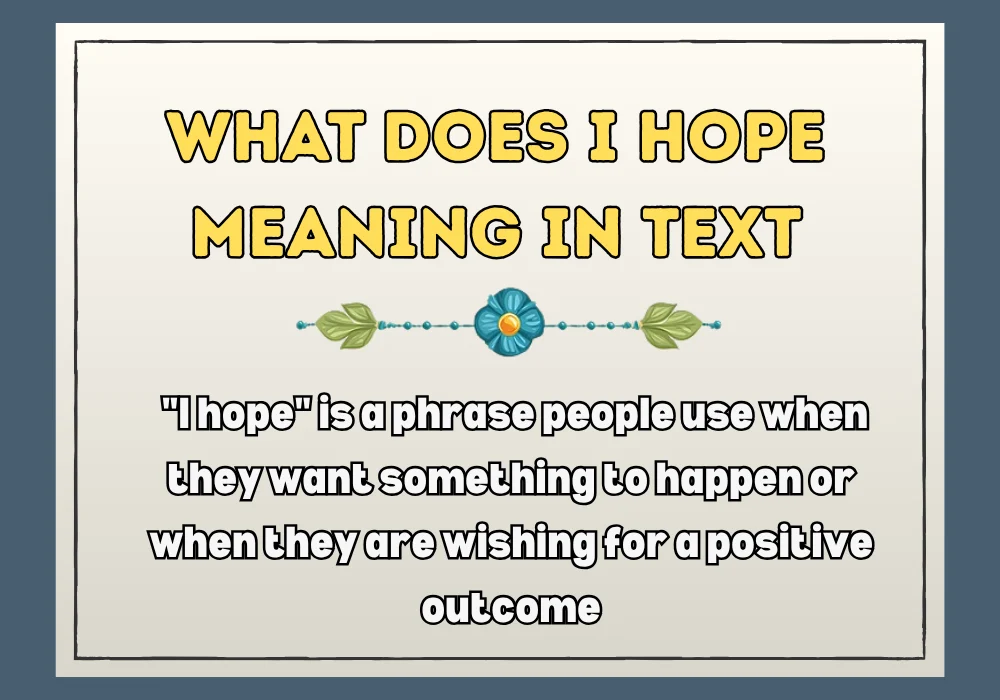
In text messages, “I hope” is a phrase people use when they want something to happen or when they are wishing for a positive outcome.
Unlike many internet abbreviations, “I hope” is not slang or an acronym. It is a standard English expression that has been used for a long time in both spoken and written communication.
What Does “I Hope” Mean?
The phrase means:
- To wish for something good
- To expect a positive result
- To express optimism
- To show care or concern
For example:
- “I hope you have a great day.”
- “I hope the weather stays nice.”
- “I hope you feel better soon.”
In each example, the speaker is expressing a positive wish or expectation.
How Is It Used in Everyday Chat?
People often use “I hope” when:
- Encouraging someone
- Talking about future plans
- Showing support
- Expressing concern
- Sharing positive expectations
Examples:
- “I hope your interview goes well.”
- “I hope we can meet next week.”
- “I hope everything works out.”
The phrase is friendly, polite, and commonly understood by people of all ages.
Where People Use I Hope
TikTok
On TikTok, users often write “I hope” in comments when reacting to videos or supporting creators.
Example:
“I hope you reach one million followers soon.”
Snapchat
Snapchat users commonly use the phrase in personal conversations.
Example:
“I hope you’re having fun.”
Instagram comments and direct messages frequently contain “I hope” when users share encouragement or positive wishes.
Example:
“I hope your trip is amazing.”
Friends and family often use “I hope” on WhatsApp to stay connected and show support.
Example:
“I hope you arrive safely.”
SMS
Traditional text messages commonly include the phrase because it sounds natural and caring.
Example:
“I hope your exam went well.”
Real Chat Examples
Example 1
A: I have a job interview tomorrow.
B: I hope it goes well.
A: Thanks!
Example 2
A: I’m not feeling great today.
B: I hope you feel better soon.
A: I appreciate that.
Example 3
A: We’re traveling this weekend.
B: I hope you have a safe trip.
A: Thank you.
Example 4
A: My results come out tomorrow.
B: I hope everything works out.
A: Me too.
Example 5
A: I’m starting a new job next week.
B: I hope you enjoy it.
A: Thanks for the support.
Example 6
A: The weather forecast looks bad.
B: I hope it clears up.
A: Same here.
Example 7
A: I’m trying to finish this project tonight.
B: I hope you get it done.
A: Fingers crossed.
Example 8
A: My team is in the finals.
B: I hope they win.
A: That would be amazing.
Example 9
A: I’m waiting for an important call.
B: I hope you get good news.
A: Thank you.
Example 10
A: I submitted my application.
B: I hope you get accepted.
A: I really hope so too.
How to Reply When Someone Says “I Hope”
Funny Replies
- “Let’s hope the universe agrees.”
- “Now that’s the positivity I need.”
- “Fingers crossed and snacks ready.”
- “I like your optimism.”
Casual Replies
- “Thanks.”
- “I hope so too.”
- “We’ll see.”
- “Let’s find out.”
Friendly Replies
- “Thank you, that means a lot.”
- “I appreciate it.”
- “That’s very kind of you.”
- “Thanks for the support.”
Neutral Replies
- “We’ll see what happens.”
- “Hopefully.”
- “Thank you.”
- “I understand.”
Is I Hope Rude or Offensive?
No, “I hope” is not rude or offensive.
In fact, it is generally considered a polite and positive phrase.
Is It Safe to Use?
Yes. The expression is appropriate in almost every type of conversation.
Can You Use It at School?
Absolutely. Teachers, students, and classmates commonly use the phrase.
Can You Use It at Work?
Yes. It is frequently used in professional communication.
Examples:
- “I hope you’re doing well.”
- “I hope the meeting goes smoothly.”
- “I hope to hear from you soon.”
Because it sounds respectful and professional, it is suitable for workplace emails and messages.
Who Uses This Term?
The phrase is used by people of all ages and backgrounds.
Gen Z Usage
Gen Z regularly uses “I hope” in:
- TikTok comments
- Snapchat chats
- Instagram messages
- Group conversations
Millennials
Millennials frequently use it in personal and professional communication.
Adults and Professionals
The phrase is also common in workplaces, schools, and formal settings because it sounds polite and natural.
How Common Is It Online?
Very common.
Unlike many slang terms that come and go, “I hope” remains a standard part of everyday communication.
Origin of the Term
The phrase “I hope” comes from the English verb hope, which has existed for centuries.
Historical Background
The word “hope” has long been associated with:
- Optimism
- Desire
- Expectation
- Positive belief
People have used it in everyday speech and writing for hundreds of years.
Influence of Modern Communication
As texting and social media became popular, the phrase continued to be used because it is simple, clear, and meaningful.
Is the Origin Clear?
Yes.
Unlike many internet slang terms, “I hope” did not originate online. It comes from traditional English language usage and remains common in both digital and face-to-face communication.
Comparison Table
| Term | Meaning | Type | Usage | Popularity |
|---|---|---|---|---|
| I Hope | Expressing a wish or positive expectation | Phrase | Showing optimism | Very High |
| IDK | I Don’t Know | Abbreviation | Uncertainty | Very High |
| IDC | I Don’t Care | Abbreviation | Indifference | High |
| IMO | In My Opinion | Abbreviation | Sharing opinions | Very High |
| BRB | Be Right Back | Abbreviation | Temporary absence | High |
Real World Usage Example
Imagine a student waiting for exam results.
They text a friend:
“I’m nervous about tomorrow.”
The friend replies:
“I hope you get the grades you want.”
In this situation, the friend is expressing support and wishing for a positive outcome. This is one of the most common ways people use “I hope” in everyday conversations.
FAQs:
What does I Hope mean in text messages?
I hope” means someone is wishing for a positive outcome or expressing optimism about something.
What does I Hope mean on TikTok?
On TikTok, it usually means a user is expressing support, encouragement, or a positive expectation.
Is I Hope slang?
No. It is a standard English phrase rather than internet slang.
Is I Hope rude or offensive?
No. It is generally polite, friendly, and respectful.
How should you reply to I Hope?
You can reply with:
- “Thanks.”
- “I hope so too.”
- “Hopefully.”
- “I appreciate that.”
Conclusion:
“I hope” is a simple phrase used to express positive wishes, expectations, and encouragement. People use it in text messages, social media conversations, and everyday communication to show support or optimism.
Because it is friendly, respectful, and widely understood, it is appropriate for both casual and professional situations. Understanding its meaning can help you better interpret conversations and respond naturally when communicating online or in person.

Hi, I’m Mike Grobgaard, founder of Lexonr. I write about meanings, internet slang, biblical terms, and modern expressions in a simple yet engaging way. My goal is to help readers understand the deeper story behind every word they search for.