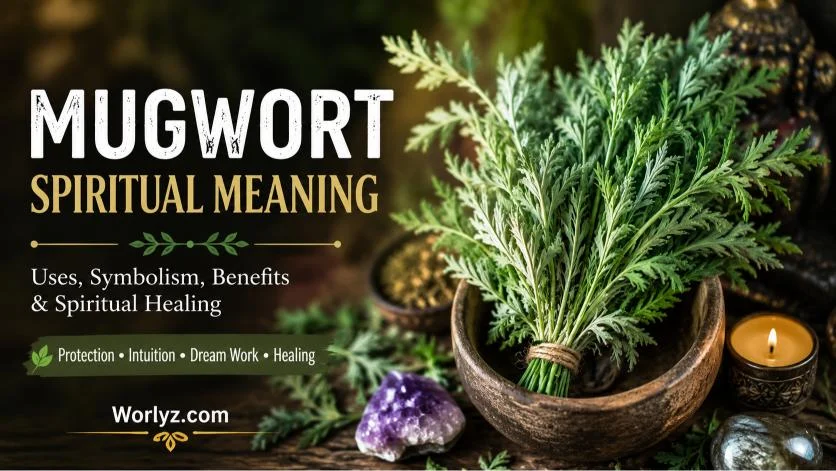
Have you ever come across mugwort and wondered if it holds a deeper spiritual meaning? Many people today are curious about herbs and their supposed spiritual effects, especially when they hear claims about dreams, protection, or hidden energies. This curiosity often leads to confusion, especially for Christians who want to stay aligned with God’s truth.
The question is important: Does mugwort have a true spiritual meaning according to the Bible, or is it shaped by human tradition and cultural belief? While the world may attach mystical ideas to plants, Scripture calls us to seek wisdom from God, not from created things.
In this guide, we will gently uncover the spiritual meaning of mugwort through a biblical lens. You will gain clarity, avoid deception, and find peace in knowing what truly comes from God.
⚡ Quick Biblical Insight
Mugwort has no specific spiritual meaning in the Bible. While herbs are part of God’s creation and can be used for practical purposes, Scripture does not assign them spiritual power, protection, or divine influence.
📖 Biblical Background
The Bible often mentions plants and herbs, but always in a grounded and purposeful way. In Genesis 1:29, God says:
“I have given you every herb bearing seed… it shall be for food.”
This shows that herbs were created for:
- Nourishment
- Healing (in some cases)
- Practical use in daily life
However, Scripture never teaches that herbs carry spiritual power or mystical abilities.
In fact, the Bible warns against relying on objects or rituals for spiritual influence. In the Old Testament, practices involving magic, divination, and spiritual manipulation were clearly rejected (Deuteronomy 18:10–12).
This helps us understand an important truth:
God is the source of spiritual power, not plants or natural elements.
✨ Spiritual Interpretations (Biblically Grounded)
Even though mugwort itself has no biblical spiritual meaning, we can reflect on deeper truths it may remind us of when viewed through Scripture.
1. God as the True Source of Healing
Verse:
“I am the Lord who heals you.” (Exodus 15:26)
Reflection:
Some associate mugwort with healing, but true healing comes from God. Whether physical or spiritual, it is the Lord who restores us. This reminds us not to place faith in herbs, but in God’s power.
2. Avoiding Spiritual Deception
Verse:
“See to it that no one takes you captive through hollow and deceptive philosophy…” (Colossians 2:8)
Reflection:
Many modern beliefs about mugwort come from traditions outside biblical teaching. This verse encourages discernment. Not everything labeled “spiritual” is from God.
3. God’s Creation Reflects His Wisdom
Verse:
“The earth is the Lord’s, and everything in it…” (Psalm 24:1)
Reflection:
Mugwort is part of God’s creation and reflects His creativity. We can appreciate it as a plant, without attributing spiritual power to it.
4. Seeking God, Not Signs
Verse:
“You will seek Me and find Me when you seek Me with all your heart.” (Jeremiah 29:13)
Reflection:
Some people turn to herbs like mugwort for guidance or spiritual experiences. But God invites us to seek Him directly. True spiritual connection comes through prayer and relationship, not through objects.
5. Living by Faith, Not by Objects
Verse:
“For we walk by faith, not by sight.” (2 Corinthians 5:7)
Reflection:
Faith is not built on rituals or items. It is rooted in trusting God. Mugwort cannot strengthen your spirit, but your relationship with God can.
🔍 Variations & Contextual Meanings
Many people encounter mugwort in different ways, often influenced by cultural or online ideas. Let’s bring clarity.
If Mugwort Is Used for Dreams
Some believe mugwort enhances dreams or spiritual visions. However, the Bible does not support using substances to access spiritual insight. True guidance comes from God alone.
If Mugwort Is Linked to Protection
There is no biblical basis for using plants as spiritual protection. God Himself is our protector, as seen in Psalm 91.
If You Feel Drawn to Its “Spiritual Energy”
Be cautious. Feelings can be influenced by suggestion or environment. Test everything against Scripture. Not all spiritual experiences are from God.
If It Is Used as a Natural Herb Only
Using plants for natural or practical purposes is not wrong. The issue arises when spiritual power is assigned to them.
⚠️ Dealing with Confusion or Spiritual Concern
If you feel unsure or uneasy about mugwort or similar practices, turn to God with confidence.
🙏 Recommended Scriptures
- Psalm 91 – God’s protection
- Ephesians 6:10–18 – Spiritual armor
- 2 Timothy 1:7 – Freedom from fear
🛡️ Guidance
- Reject fear and superstition
- Do not depend on objects for spiritual outcomes
- Stay rooted in Scripture
- Pray for clarity and discernment
- Seek wise counsel if needed
God’s truth always brings peace, not confusion.
🌿 Faith-Based Action Steps
🙏 Prayer Example
“Lord, help me to seek You above all things. Guard my heart from confusion and guide me in Your truth. Teach me to rely on You alone. Amen.”
🔍 Self-Examination
Ask yourself:
- Am I trusting in God or in objects?
- Am I influenced by culture more than Scripture?
- Am I seeking truth or experiences?
Let God gently realign your heart.
🤝 Spiritual Support
Talk with:
- A pastor
- A trusted Christian friend
- A mentor grounded in Scripture
Growth becomes stronger when shared with others.
❓ FAQs
What is the mugwort spiritual meaning in Christianity?
Mugwort has no spiritual meaning in Christianity. The Bible does not assign spiritual power to herbs. Any meaning attached to it comes from human tradition, not Scripture.
Is mugwort mentioned in the Bible?
No, mugwort is not directly mentioned in the Bible. While herbs are referenced, none are given mystical or spiritual abilities.
Can mugwort affect your spiritual life?
No, mugwort does not influence your spiritual life. Your relationship with God is what shapes your spiritual condition.
Is using mugwort a sin?
Using mugwort as a plant is not sinful. However, using it for spiritual or mystical purposes can lead away from biblical truth and should be avoided.
Why do people believe mugwort is spiritual?
These beliefs come from cultural traditions, not the Bible. Many practices labeled spiritual today are not rooted in God’s Word.
Should Christians avoid herbs like mugwort?
Christians should avoid assigning spiritual power to herbs. Using them for natural purposes is fine, but spiritual reliance should be on God alone.
🏁 Conclusion
Mugwort may seem mysterious or spiritually significant in today’s culture, but Scripture brings us back to truth. It is simply a plant—part of God’s creation, not a source of power, protection, or revelation.
As believers, we are called to seek God, not signs. To trust His Word, not worldly ideas. And to walk in faith, not confusion.
If you’ve been searching for meaning, let this be your peace:
God is not hidden in objects He has made. He is near, present, and ready to guide you directly.
Stay rooted in truth, walk in discernment, and let your heart rest in Him alone.

Hi, I’m Mike Grobgaard, founder of Lexonr. I write about meanings, internet slang, biblical terms, and modern expressions in a simple yet engaging way. My goal is to help readers understand the deeper story behind every word they search for.