The word preemptive is commonly used in news, business, strategy, and everyday conversations. At first glance, it may sound complex, but its meaning is actually straightforward once you break it down. Understanding the preemptive meaning helps you follow discussions more clearly and use the word correctly in both formal and casual situations.
From military strategies to daily decisions, preemptive actions are all about acting early to avoid problems or gain an advantage. This article explains the meaning in detail, with simple language, examples, and comparisons.
What Does Preemptive Mean
Definition
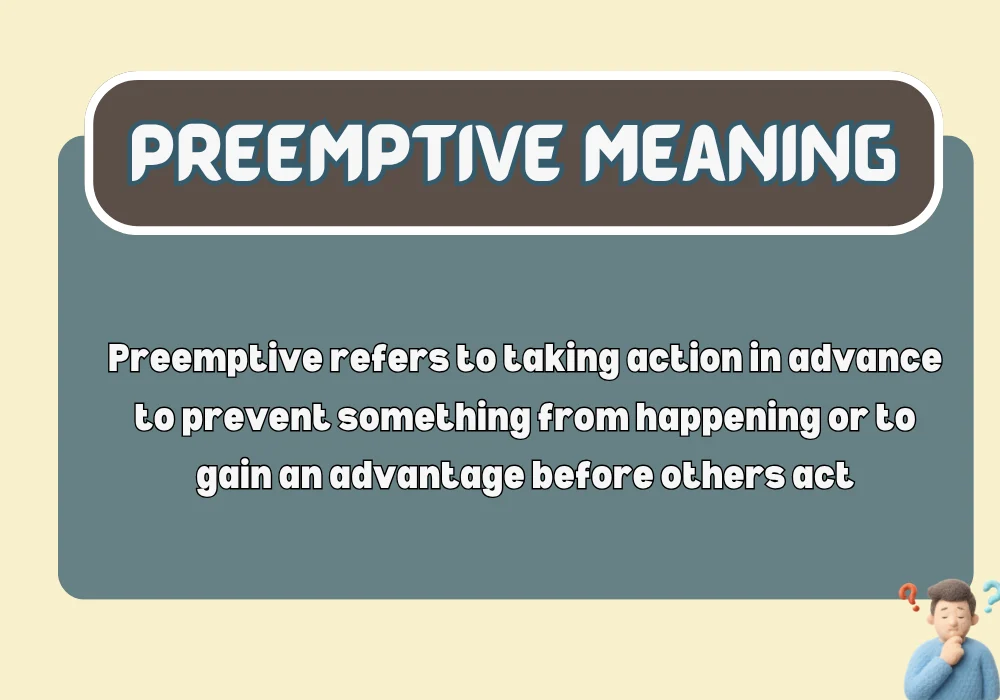
Preemptive refers to taking action in advance to prevent something from happening or to gain an advantage before others act.
In simple terms, a preemptive action is something you do before a problem occurs or before someone else makes a move.
Origin and Background
The word preemptive comes from the verb preempt, which is derived from Latin roots meaning to take beforehand. Originally, it was used in legal and commercial contexts to describe buying or claiming something before others could.
Over time, the meaning expanded into areas like:
- Military strategy
- Politics
- Business planning
- Everyday decision-making
Different Meanings of Preemptive Based on Context
Preemptive in General Use
In everyday situations, preemptive means acting early to avoid future trouble.
Examples:
- Sending a reminder message before someone forgets
- Fixing a small issue before it becomes bigger
This usage focuses on prevention and foresight.
Preemptive in Military and Politics
In military or political contexts, preemptive often refers to taking action before an opponent does.
Examples:
- A preemptive strike to stop a potential attack
- A policy introduced before a crisis develops
Here, the goal is to reduce risk or gain control early.
Preemptive in Business and Work
In professional settings, preemptive actions are used to stay ahead.
Examples:
- Addressing customer complaints before they escalate
- Launching a product before competitors
In this sense, preemptive thinking is seen as smart and strategic.
Preemptive Meaning in Simple Language
In everyday language, preemptive can mean:
- Acting early
- Preventing a problem
- Staying one step ahead
- Taking control before something happens
It is often linked with planning and awareness.
Examples of Preemptive in Conversations
Everyday Conversation Example
I made a preemptive decision to leave early to avoid traffic.
Work Related Example
The team took preemptive steps to fix the issue before clients noticed.
Strategic Context Example
The company made a preemptive move to stay ahead of competitors.
These examples show how the word fits into different situations.
Preemptive Compared to Similar Words
Understanding preemptive becomes easier when compared to related terms.
| Word | Meaning | Key Difference |
|---|---|---|
| Preemptive | Acting before something happens | Focus on prevention |
| Preventive | Stopping something from happening | More general |
| Proactive | Taking initiative early | Broader and more positive |
| Reactive | Responding after something happens | Opposite meaning |
| Anticipatory | Expecting something in advance | Focus on prediction |
Preemptive is specifically about taking action early to block or avoid something.
Importance of Preemptive Thinking
Preemptive thinking is valuable in many areas of life because it helps:
- Avoid problems before they grow
- Save time and resources
- Reduce stress
- Improve decision-making
People who think preemptively are often better prepared for challenges.
Common Mistakes or Misunderstandings
Confusing Preemptive With Reactive
Preemptive means acting before something happens, while reactive means responding after.
Assuming Preemptive Is Always Negative
Although sometimes used in serious contexts like military actions, preemptive is often positive and practical.
Using Preemptive Too Formally
The word can sound formal, so it should be used naturally in casual conversations.
Preemptive in Daily Life
You may not notice it, but preemptive actions are part of everyday life:
- Charging your phone before it dies
- Studying before an exam
- Saving money for future needs
- Leaving early to avoid delays
These are all simple examples of preemptive behavior.
Related Words and Concepts
When learning the preemptive meaning, you may also come across:
- Preventive
- Proactive
- Strategic
- Forward-thinking
- Prepared
Each term connects to the idea of planning ahead.
FAQs:
What does preemptive mean in simple words?
Preemptive means taking action early to prevent a problem or gain an advantage.
Is preemptive the same as proactive?
Not exactly, preemptive focuses on preventing something specific, while proactive is a broader approach to taking initiative.
Can preemptive actions be positive?
Yes, preemptive actions are often positive because they help avoid problems.
What is a preemptive strike?
A preemptive strike is an action taken before an opponent attacks to prevent or reduce harm.
How is preemptive used in daily life?
Preemptive is used in everyday actions like planning ahead, avoiding risks, and solving problems early.
Conclusion:
The preemptive meaning centers on acting early to prevent problems or gain an advantage. Whether used in business, daily life, or strategic situations, it reflects planning, awareness, and smart decision-making.
By understanding how preemptive works in different contexts, you can use the word more effectively and recognize its importance in both simple and complex situations.

Alex is the owner and founder of Worlyz. He is passionate about explaining word meanings, language concepts, slang terms, and educational topics in a clear and simple manner. Alex focuses on creating high quality, well researched, and user focused content that helps readers understand complex words easily. Through Worlyz, his goal is to make learning language meanings and concepts accessible and reliable for everyone.