You may have heard the term public relations in business meetings, news articles, or job descriptions, but many people still wonder what it truly means. Understanding the public relations meaning is important because PR plays a major role in shaping how individuals, brands, and organizations are viewed by the public.
From managing reputation to handling crises and building trust, public relations influences how messages are communicated and received. In today’s digital and social media driven world, PR is more important than ever.
What Is Public Relations
Definition of Public Relations
Public relations, often shortened to PR, refers to the strategic communication process used by individuals, companies, or organizations to build and maintain a positive relationship with their audience.
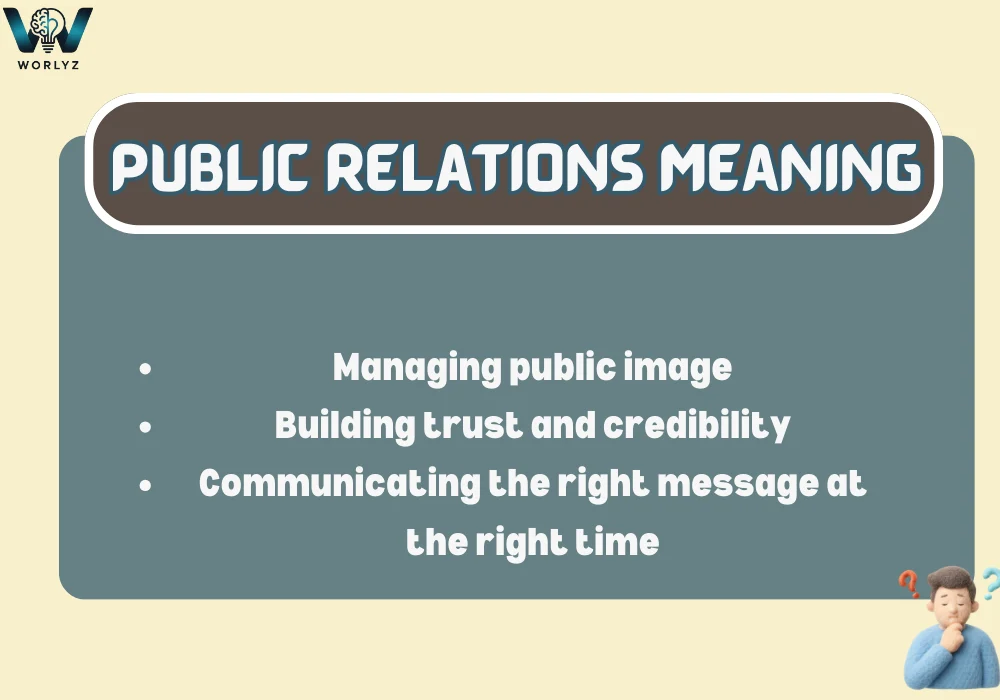
In simple terms, public relations is about:
- Managing public image
- Building trust and credibility
- Communicating the right message at the right time
Unlike advertising, PR focuses on reputation and relationships rather than direct promotion.
Origin of Public Relations
The concept of public relations dates back to the early 20th century, when organizations realized the importance of shaping public opinion. Early PR efforts focused on media relations, public statements, and community engagement.
Over time, public relations evolved into a professional field involving strategy, research, communication planning, and crisis management.
How Public Relations Works
Core Purpose of Public Relations
The main goal of public relations is to influence how people perceive a brand or organization. This is achieved by creating honest, clear, and consistent communication.
Public relations helps organizations:
- Build long-term credibility
- Maintain a positive public image
- Respond effectively to public feedback
Public Relations vs Advertising
Many people confuse PR with advertising, but they serve different purposes.
- Advertising is paid promotion
- Public relations focuses on earned trust and reputation
- PR often relies on media coverage, relationships, and storytelling
While advertising says look at us, PR says here is why you can trust us.
Public relations meaning in business
What is PR in Business?
Public Relations (PR) in business refers to how a company manages its image, reputation, and communication with the public, customers, and media.
Key Functions
- Building a positive brand image
- Managing company reputation
- Handling press and media relations
- Responding to public feedback or crises
Simple Meaning
PR in business is all about creating trust and maintaining a good reputation.
Public relations meaning in communication
Role in Communication
In communication, PR refers to the process of sharing clear, controlled, and strategic messages between an organization and its audience.
Main Focus Areas
- Effective messaging
- Media communication
- Public awareness
- Relationship building
Key Idea
PR ensures that communication is consistent, professional, and positive.
PR meaning in social media
Social Media PR
PR in social media means managing how a brand or person is seen on platforms like Facebook, Instagram, X (Twitter), and TikTok.
Common Activities
- Posting engaging content
- Handling comments and feedback
- Influencer collaborations
- Managing online reputation
Simple Meaning
PR on social media is about building a strong and positive online presence.
PR meaning in job
PR Job Role
In a job context, PR refers to professionals who manage public image and communication for companies or individuals.
Responsibilities
- Writing press releases
- Organizing events
- Media communication
- Crisis management
Skills Needed
- Communication skills
- Creativity
- Networking ability
- Writing skills
Simple Meaning
A PR job is about maintaining and improving reputation professionally.
PR meaning in marketing
PR in Marketing
In marketing, PR works alongside advertising to create a positive brand image without direct selling.
Key Differences
- Marketing sells products
- PR builds trust and reputation
PR Activities in Marketing
- Brand storytelling
- Media coverage
- Public campaigns
- Influencer partnerships
Core Idea
PR in marketing helps a brand become trusted, recognizable, and respected.
Types of Public Relations
Media Relations
This involves working with journalists, news outlets, and bloggers to share newsworthy stories, press releases, or interviews.
Corporate Communications
Corporate PR focuses on internal and external communication, including company announcements, leadership messaging, and investor relations.
Crisis Management
When a brand faces controversy or negative publicity, PR professionals manage communication to protect reputation and restore trust.
Community and Social Relations
This type of PR focuses on building relationships with local communities, nonprofits, and the general public.
Digital and Social Media PR
Modern public relations includes managing online reputation, social media presence, and influencer collaborations.
Public Relations Explained in Simple Language
Think of public relations as storytelling with responsibility. It is about shaping how people feel and think about a person, company, or organization through honest communication.
If marketing attracts attention, public relations builds belief.
How Public Relations Is Used Today
Public relations is used across many industries and platforms.
Common PR Applications
- Company press releases
- Brand announcements
- Social media reputation management
- Influencer partnerships
- Public statements during crises
Example scenario:
A company launches a new product and uses PR to get media coverage, answer public questions, and manage feedback.
Examples of Public Relations in Action
Brand Image Building
A company shares success stories, achievements, and community work to build a positive public image.
Crisis Response
An organization issues a public statement and apology after a service issue to maintain trust.
Thought Leadership
A business leader writes opinion pieces or gives interviews to position themselves as an industry expert.
These examples show how PR shapes perception rather than pushing sales.
Common Misunderstandings About Public Relations
PR Is Not Just Press Releases
Public relations involves strategy, research, and long-term planning, not just sending news to journalists.
PR Is Not the Same as Marketing
Marketing focuses on selling products, while PR focuses on reputation and trust.
PR Is Not About Hiding the Truth
Good public relations is built on transparency, honesty, and ethical communication.
Related Terms Often Connected to Public Relations
When learning the public relations meaning, you may also come across:
- Corporate communication
- Media relations
- Reputation management
- Brand image
- Crisis communication
These terms are closely linked to PR strategies.
FAQs:
What is the main purpose of public relations?
The main purpose of public relations is to build and maintain a positive relationship between an organization and its audience.
How is public relations different from marketing?
Public relations focuses on reputation and trust, while marketing focuses on promoting and selling products or services.
What skills are important in public relations?
Key skills include communication, writing, relationship building, strategic thinking, and crisis management.
Is public relations only for big companies?
No, public relations is useful for small businesses, personal brands, nonprofits, and public figures as well.
Does public relations include social media?
Yes, modern public relations includes social media management and online reputation building.
Conclusion:
The public relations meaning centers on building trust, managing reputation, and communicating effectively with the public. It is a strategic process that helps organizations shape how they are perceived over time.
Whether used by businesses, individuals, or institutions, public relations plays a vital role in maintaining credibility and positive relationships. Understanding PR allows you to see how messages are crafted, shared, and received in today’s connected world.
Feel free to share which business or communication term you would like explained next.

Alex is the owner and founder of Worlyz. He is passionate about explaining word meanings, language concepts, slang terms, and educational topics in a clear and simple manner. Alex focuses on creating high quality, well researched, and user focused content that helps readers understand complex words easily. Through Worlyz, his goal is to make learning language meanings and concepts accessible and reliable for everyone.