The term CNC can appear in modern conversations, online discussions, and private chats, especially when people are talking about relationships or personal boundaries. If you have come across this term and felt unsure about it, you are not alone. Understanding the CNC meaning in relationship is important because it relates to communication, trust, and consent between partners.
Unlike many casual abbreviations, CNC carries a serious and sensitive meaning. It is not something to guess or misunderstand, especially when used in relationship contexts. This guide explains it clearly, respectfully, and in a way that helps you understand both the meaning and its implications.
What Does CNC Mean in a Relationship
Definition
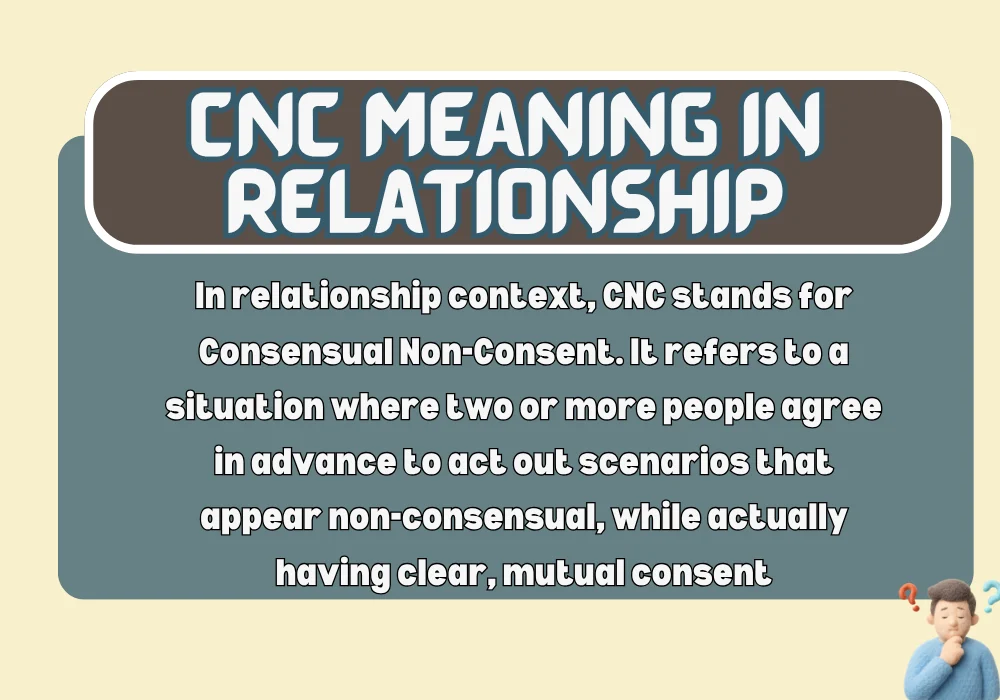
In relationship context, CNC stands for Consensual Non-Consent. It refers to a situation where two or more people agree in advance to act out scenarios that appear non-consensual, while actually having clear, mutual consent.
This means:
- Everything is planned and agreed upon beforehand
- All participants fully understand the situation
- Consent is continuous and can be withdrawn at any time
Important Clarification
Even though the term includes the word non-consent, real consent is always present. Without consent, the situation becomes harmful and unacceptable.
CNC is built on:
- Trust
- Communication
- Clear boundaries
Understanding CNC in Simple Language
In simple terms, CNC means:
- Acting out a situation where control or resistance is part of the scenario
- But both people already agreed to it beforehand
A simple way to think about it:
It looks like a lack of consent, but in reality, it is fully agreed upon in advance.
How CNC Is Used in Relationship Discussions
In Private Conversations
CNC is usually discussed privately between partners, not in casual or public conversations.
Example:
They talked openly about boundaries before considering CNC.
In Online Communities
The term may appear in:
- Relationship forums
- Advice discussions
- Educational content about boundaries and consent
In these spaces, it is usually explained carefully to avoid misunderstanding.
Key Elements of CNC in Relationships
Clear Communication
Before anything happens, partners must clearly discuss:
- What is allowed
- What is not allowed
- Personal comfort levels
Mutual Consent
Consent must be:
- Freely given
- Fully informed
- Ongoing
Both people must agree without pressure.
Safe Boundaries
Boundaries define limits and ensure safety.
Examples:
- Things that are off-limits
- Physical or emotional restrictions
Safe Words or Signals
A safe word or signal is used to stop the situation immediately if someone feels uncomfortable.
This ensures that:
- Control can be taken back instantly
- Safety is always prioritized
Examples of CNC in Discussions
Example of Communication
They had a long conversation about trust and boundaries before even considering CNC.
Example of Consent Emphasis
CNC only works when both partners fully agree and feel safe.
Example in Educational Context
Many relationship guides explain CNC to highlight the importance of clear consent.
These examples show that CNC is not casual but requires careful understanding.
CNC Compared to Related Relationship Concepts
| Concept | Meaning | Key Difference |
|---|---|---|
| CNC | Consensual non-consent | Pre-agreed scenario with boundaries |
| Consent | Permission or agreement | Basic requirement in all relationships |
| Boundaries | Personal limits | Define what is acceptable |
| Trust | Emotional security | Foundation of CNC |
| Communication | Open discussion | Necessary for clarity |
CNC depends heavily on all these elements working together.
Common Misunderstandings About CNC
Thinking CNC Means No Consent
This is incorrect. CNC always involves clear and prior consent.
Assuming It Is Casual or Light
CNC is serious and requires maturity, trust, and responsibility.
Ignoring Communication
Without communication, CNC becomes unsafe and harmful.
Why Understanding CNC Is Important
Understanding CNC helps:
- Avoid confusion in conversations
- Promote awareness about consent
- Encourage respectful relationship behavior
It also helps people recognize the difference between safe, agreed situations and harmful ones.
CNC in Modern Conversations
Today, CNC may appear in:
- Online relationship discussions
- Educational content about consent
- Private conversations between partners
However, it is not commonly used in everyday casual texting and should always be handled carefully.
Related Terms You May Encounter
When learning about CNC meaning in relationship, you may also see:
- Consent
- Boundaries
- Trust
- Communication
- Safe word
These terms are closely connected and essential for understanding the topic fully.
FAQs:
What does CNC mean in a relationship?
CNC means consensual non-consent, where people agree in advance to act out certain scenarios with clear boundaries and consent.
Is CNC safe in relationships?
CNC can only be safe when there is clear communication, trust, and strict boundaries between partners.
Why is consent important in CNC?
Consent is the foundation of CNC and ensures that all participants feel safe and respected.
Can CNC be discussed casually?
No, CNC should be discussed carefully and respectfully, usually in private conversations.
What happens if boundaries are ignored in CNC?
Ignoring boundaries makes the situation unsafe and harmful, which is why clear limits are essential.
Conclusion:
The CNC meaning in relationship is often misunderstood, but it is rooted in trust, communication, and clear consent. It refers to situations that are carefully agreed upon in advance, even if they may appear otherwise on the surface.
Understanding CNC is important for recognizing the value of consent and respecting boundaries in all relationships. Clear communication and mutual respect are always the most important factors in any healthy connection.
If you have more questions about relationship terms or meanings, feel free to explore and learn more to stay informed and aware.

John is the founder and primary content creator of Worlyz. He has a strong passion for explaining word meanings, language concepts, slang terms, and educational topics in a clear and simple way. John focuses on creating well researched, reader friendly content that helps users easily understand complex words and ideas. Through Worlyz, his goal is to make learning meanings and concepts straightforward and accessible for everyone.