The word serpent is one of those terms that carries strong imagery and multiple meanings depending on where and how it is used. You might see it in religious texts, literature, movies, or even everyday conversation. Understanding the serpent meaning helps you interpret its symbolic, literal, and cultural significance more clearly.
While serpent often refers to a snake, it is rarely just about the animal. In many contexts, it represents deeper ideas such as wisdom, danger, transformation, or deception. This makes it a powerful and widely used word across different fields.
What Does Serpent Mean
Definition
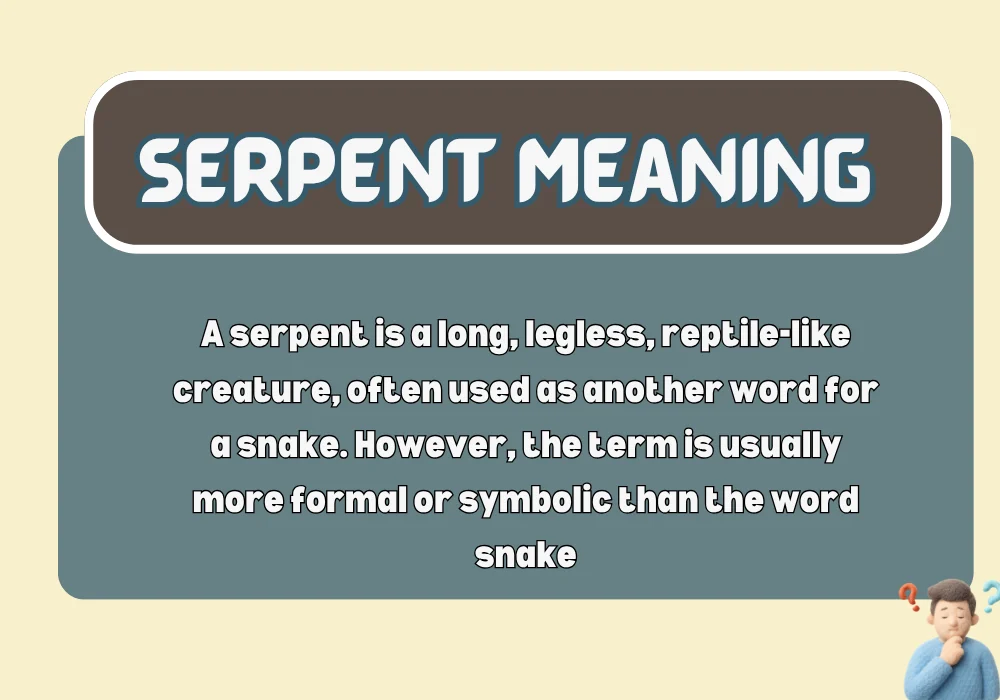
A serpent is a long, legless, reptile-like creature, often used as another word for a snake. However, the term is usually more formal or symbolic than the word snake.
In broader usage, serpent can also represent:
- A symbol of danger or evil
- A figure of wisdom or transformation
- A metaphor for something hidden or deceptive
Origin and Background
The word serpent comes from the Latin word serpens, which means crawling or creeping. It entered English through Old French and has been used for centuries in religious, literary, and poetic contexts.
Unlike the everyday word snake, serpent is often used in more serious, symbolic, or dramatic situations.
Different Meanings of Serpent Based on Context
Serpent as a Literal Animal
In its simplest sense, a serpent refers to a snake, especially in a formal or descriptive way.
Examples:
- A serpent moving through the grass
- A desert serpent hunting for prey
This usage is common in storytelling, documentaries, and descriptive writing.
Serpent in Religion and Spiritual Texts
One of the most well-known uses of serpent appears in religious texts, especially in the Bible.
In this context, the serpent often represents:
- Temptation
- Deception
- Evil influence
For example, the serpent in the Garden of Eden is associated with misleading and influencing human decisions.
However, in some cultures and beliefs, the serpent can also symbolize:
- Wisdom
- Healing
- Renewal
This dual meaning makes the word complex and powerful.
Serpent as a Symbol in Literature
In literature and storytelling, serpent is often used symbolically rather than literally.
It may represent:
- A hidden threat
- A cunning or manipulative person
- A dangerous situation
Example:
He spoke calmly, but his words carried the tone of a serpent.
Serpent in Modern Language
In modern usage, serpent is sometimes used metaphorically to describe behavior or personality.
Examples:
- Calling someone a serpent implies deceit
- Describing a situation as serpent-like suggests danger or unpredictability
Although less common in casual speech, it still appears in writing, media, and storytelling.
Serpent Meaning in Simple Language
In everyday terms, serpent can mean:
- A snake
- Something dangerous or tricky
- A person who cannot be trusted
- A symbol of change or hidden power
The exact meaning depends on context, tone, and intention.
Examples of Serpent in Conversations
Literal Example
We saw a serpent near the riverbank.
Symbolic Example
The story describes the villain as a serpent hiding in the shadows.
Religious Context Example
The serpent represents temptation in the narrative.
Figurative Example
Be careful, he can be a real serpent when it comes to business deals.
These examples show how the meaning shifts across situations.
Serpent Compared to Similar Words
Understanding serpent becomes easier when compared with related words.
| Word | Meaning | Key Difference |
|---|---|---|
| Serpent | Snake or symbolic creature | Formal and symbolic |
| Snake | Common reptile | Everyday usage |
| Viper | Poisonous snake | Emphasizes danger |
| Reptile | Animal category | Scientific term |
| Dragon | Mythical creature | Larger and fictional |
Serpent is unique because it blends literal and symbolic meanings.
Symbolism of the Serpent Across Cultures
The serpent has been an important symbol in many cultures throughout history.
Positive Symbolism
- Wisdom and knowledge
- Healing and medicine
- Transformation and renewal
Negative Symbolism
- Deception and lies
- Danger and threat
- Evil or temptation
This contrast is what makes the serpent such a powerful symbol.
Common Mistakes or Misunderstandings
Thinking Serpent Always Means Evil
While often associated with danger, serpent can also represent wisdom or healing in some cultures.
Using Serpent and Snake Interchangeably
Although similar, serpent is more formal and symbolic than snake.
Assuming Serpent Is Only Religious
Serpent appears in literature, culture, and everyday expressions beyond religion.
Serpent in Modern Media and Culture
Today, serpent appears in:
- Movies and fantasy stories
- Symbolic tattoos and art
- Books and poetry
- Cultural and mythological references
It is often used to create mystery, tension, or deeper meaning.
Related Words and Concepts
When learning the serpent meaning, you may also come across:
- Snake
- Viper
- Cobra
- Dragon
- Reptile
Each word connects to serpent but carries its own specific meaning.
FAQs:
What does serpent mean in simple words?
Serpent means a snake or something that symbolizes danger, deception, or hidden power.
Is serpent the same as snake?
Serpent and snake refer to the same animal, but serpent is more formal and often symbolic.
What does the serpent symbolize in religion?
In many religious contexts, the serpent represents temptation, deception, or evil influence.
Can serpent have a positive meaning?
Yes, in some cultures serpent symbolizes wisdom, healing, and transformation.
Is serpent used in modern language?
Yes, serpent is still used in literature, media, and symbolic expressions, though less in casual speech.
Conclusion:
The serpent meaning goes beyond a simple animal definition. It represents a powerful symbol used across religion, literature, and culture to express ideas like danger, wisdom, transformation, and deception.
By understanding its different meanings and contexts, you can better interpret its use in stories, conversations, and symbolic language.

John is the founder and primary content creator of Worlyz. He has a strong passion for explaining word meanings, language concepts, slang terms, and educational topics in a clear and simple way. John focuses on creating well researched, reader friendly content that helps users easily understand complex words and ideas. Through Worlyz, his goal is to make learning meanings and concepts straightforward and accessible for everyone.