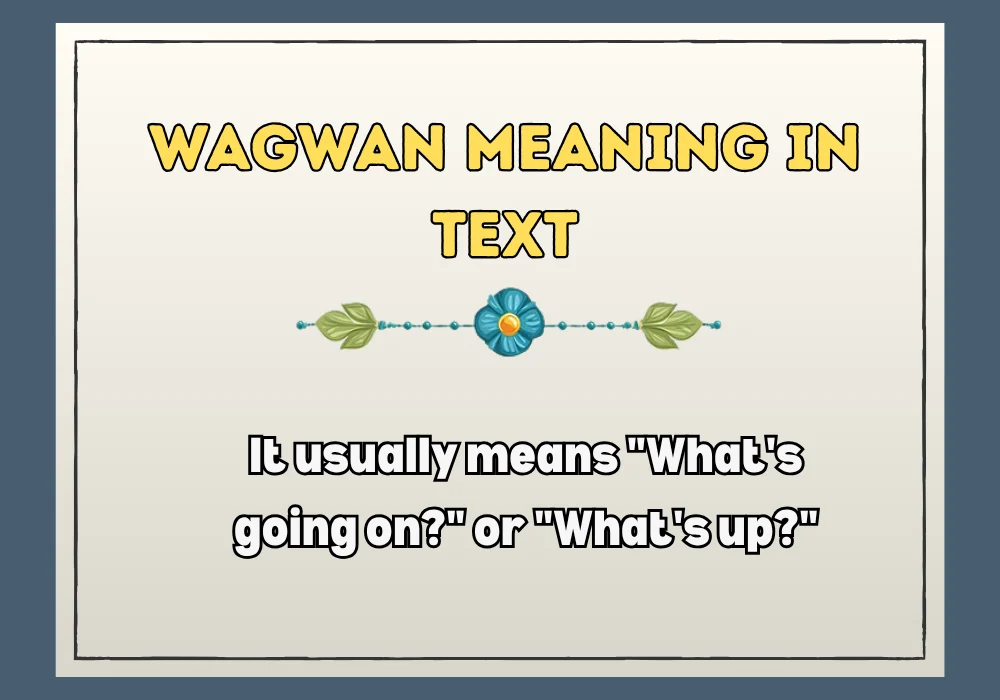
If you’ve seen “wagwan” in a text message, TikTok comment, Snapchat chat, or Instagram DM, it usually means “What’s going on?” or “What’s up?” It is a casual greeting used to ask someone how they are doing or what they are currently doing.
The term is popular in texting, social media, and online conversations, especially among younger users and in communities influenced by Caribbean culture.
Many people search for its meaning after seeing it in messages and wondering whether it is slang, a greeting, or something else entirely.
Wagwan Meaning In Text
Wagwan is a slang greeting that means:
- What’s going on?
- What’s up?
- How are you?
- What’s happening?
People use it to start a conversation in a friendly and informal way.
For example:
“Wagwan bro, how’s your day going?”
In this message, the sender is simply greeting their friend and asking how things are going.
Is Wagwan Slang?
Yes, wagwan is slang.
It comes from a pronunciation of “what’s going on” and has become widely used in texting, social media, and casual conversations.
What Does Wagwan Mean in Everyday Chat?
In everyday messaging, wagwan is usually used as a greeting.
Examples:
- “Wagwan, mate?”
- “Wagwan everyone?”
- “Wagwan, what are you doing tonight?”
The meaning remains friendly and conversational.
Where People Use Wagwan
TikTok
TikTok users often use wagwan in comments, captions, and videos as a casual greeting.
Example:
“Wagwan TikTok, hope everyone’s having a good day.”
Snapchat
On Snapchat, friends commonly use wagwan to start chats.
Example:
“Wagwan, haven’t talked in a while.”
Instagram users may include wagwan in comments or direct messages.
Example:
“Wagwan bro, nice post.”
In WhatsApp conversations, wagwan is often used instead of saying hello.
Example:
“Wagwan, are we still meeting later?”
SMS
The term also appears in regular text messages.
Example:
“Wagwan, what time are you getting here?”
Real Chat Examples
Example 1
A: Wagwan?
B: Not much, just watching TV.
A: Nice.
Example 2
A: Wagwan bro?
B: Just got home from work.
A: Long day?
Example 3
A: Wagwan?
B: Getting ready for the game.
A: Good luck.
Example 4
A: Wagwan mate?
B: Nothing much. You?
A: Same here.
Example 5
A: Wagwan everyone?
B: We’re heading out soon.
A: I’ll join you.
Example 6
A: Wagwan?
B: Studying for tomorrow’s exam.
A: Hope it goes well.
Example 7
A: Wagwan bro?
B: Just chilling.
A: Sounds relaxing.
Example 8
A: Wagwan?
B: Watching a new movie.
A: Is it good?
Example 9
A: Wagwan?
B: About to order dinner.
A: Nice choice.
Example 10
A: Wagwan man?
B: Just finished work.
A: Time to relax then.
How to Reply When Someone Says “Wagwan”
Funny Replies
- “The sky, mostly.”
- “Nothing exciting, unfortunately.”
- “Just trying to survive Monday.”
Casual Replies
- “Not much, you?”
- “Just relaxing.”
- “Doing good, thanks.”
Friendly Replies
- “Hey! I’m doing well.”
- “Good to hear from you.”
- “Everything’s going great.”
Neutral Replies
- “Nothing much.”
- “Just busy with work.”
- “All good here.”
Is Wagwan Rude or Offensive?
No, wagwan is generally not rude or offensive.
It is commonly used as a friendly greeting among friends and acquaintances.
Is It Safe to Use?
Yes. In casual conversations, wagwan is considered harmless and friendly.
Can You Use It at School?
Usually yes, especially in informal conversations with friends.
Can You Use It at Work?
In casual workplace chats it may be acceptable, but formal workplaces usually prefer standard greetings such as “Hello” or “How are you?”
Who Uses This Term?
Wagwan is most commonly used by:
- Teenagers
- Young adults
- Social media users
- Online gaming communities
- Friends in casual conversations
Gen Z Usage
Gen Z frequently uses wagwan in:
- TikTok comments
- Snapchat messages
- Instagram DMs
- Group chats
How Common Is It?
The term appears regularly online and has become recognizable even among people who are not part of the cultures where it originated.
Origin of the Term
Wagwan comes from Jamaican Patois, where it is a shortened form of “What’s going on?”
Cultural Influence
The expression spread through:
- Jamaican culture
- Music
- Social media
- Online communities
As Caribbean culture gained global influence, the phrase became more common in everyday internet communication.
Is the Origin Clear?
Yes. Unlike some internet slang terms with uncertain beginnings, wagwan is widely recognized as originating from Jamaican Patois.
Comparison Table
| Term | Meaning | Type | Usage | Popularity |
|---|---|---|---|---|
| Wagwan | What’s going on? | Slang Greeting | Greeting friends | High |
| IDK | I Don’t Know | Abbreviation | Showing uncertainty | Very High |
| IDC | I Don’t Care | Abbreviation | Showing indifference | High |
| IMO | In My Opinion | Abbreviation | Sharing opinions | Very High |
| BRB | Be Right Back | Abbreviation | Temporary absence | High |
Real World Usage Example
Imagine you open Snapchat and receive a message from a friend saying:
“Wagwan?”
They are not asking a complicated question. They are simply saying hello and asking what you’re doing or how things are going.
You might reply:
“Not much, just watching a movie. You?”
This is exactly how the term is commonly used in real-life conversations and online chats.
FAQs:
What does Wagwan mean in text messages?
Wagwan means “What’s going on?” or “What’s up?” It is used as a casual greeting.
What does Wagwan mean on TikTok?
On TikTok, wagwan is usually used as a friendly greeting in comments, captions, and videos.
Is Wagwan slang?
Yes. Wagwan is a slang expression that comes from Jamaican Patois.
Is Wagwan rude or offensive?
No. It is generally considered friendly and informal.
How should you reply to Wagwan?
You can reply with:
- “Not much, you?”
- “I’m good.”
- “Just relaxing.”
- “What’s up with you?”
Conclusion:
Wagwan is a popular slang greeting that means “What’s going on?” or “What’s up?” It is commonly used in text messages, social media conversations, and casual chats between friends.
The term is friendly, easy to understand, and widely recognized online. While it’s perfect for informal conversations, traditional greetings may be more appropriate in formal settings.

Hi, I’m Mike Grobgaard, founder of Lexonr. I write about meanings, internet slang, biblical terms, and modern expressions in a simple yet engaging way. My goal is to help readers understand the deeper story behind every word they search for.