The word mown is commonly seen in books, conversations, gardening discussions, and even online chats, yet many people are unsure what it actually means. Understanding the mown meaning helps you use the word correctly in both writing and speech. Although it sounds old-fashioned to some people, mown is still widely used today, especially when talking about grass, fields, lawns, or things that have been cut down.
Because English has many irregular verbs, words like mown can sometimes confuse learners and native speakers alike. This detailed guide explains the meaning, usage, examples, comparisons, and common misunderstandings surrounding the word.
What Does Mown Mean
Definition
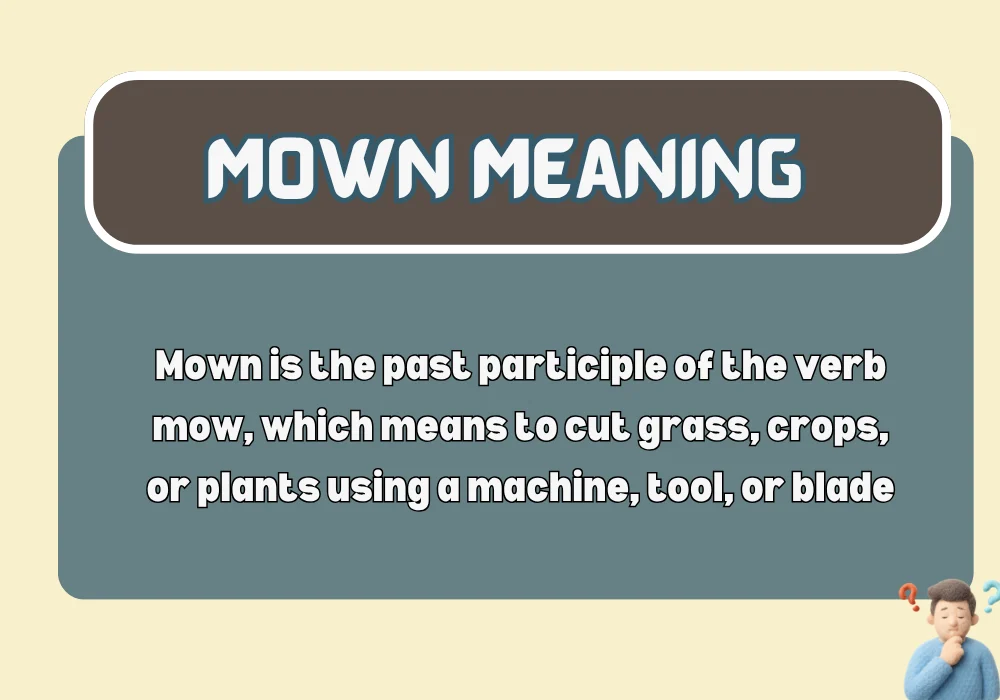
Mown is the past participle of the verb mow, which means to cut grass, crops, or plants using a machine, tool, or blade.
In simple terms:
- Mow = the action
- Mown = something that has already been cut
Example:
The lawn has been mown.
This means the grass was already cut earlier.
Origin of the Word
The word mow comes from Old English māwan, meaning to cut grass or crops. Over time, English developed different verb forms:
- Mow
- Mowed
- Mown
Today, both “mowed” and “mown” are used, though mown often sounds slightly more formal or traditional.
How Mown Is Used in Everyday Language
Mown in Gardening and Landscaping
The most common use of mown relates to lawns, grass, and fields.
Examples:
- Freshly mown grass
- A neatly mown lawn
- Mown fields after harvest
This usage is especially common in gardening, farming, and outdoor discussions.
Mown in Descriptive Writing
Writers often use mown because it sounds more vivid and descriptive.
Example:
The smell of freshly mown grass filled the air.
This phrase creates a strong visual and sensory image.
Mown in Literature and Formal English
Mown appears frequently in:
- Novels
- Poetry
- Nature writing
- Formal descriptions
It gives sentences a polished and traditional tone.
Mown Meaning in Simple Language
In everyday simple English, mown means:
- Already cut
- Trimmed down
- Cleared using a mower or blade
It is most often connected to grass or plants.
Examples of Mown in Conversations
Everyday Conversation Example
The backyard looks great now that the grass is mown.
Nature Description Example
We walked across a freshly mown field.
Gardening Example
The lawn had not been mown for weeks.
These examples show how naturally the word fits into normal conversation.
Mown Compared to Similar Words
Understanding mown becomes easier when compared with related words.
| Word | Meaning | Key Difference |
|---|---|---|
| Mown | Already cut grass or crops | Past participle form |
| Mowed | Past tense or participle of mow | More modern and common |
| Trimmed | Cut neatly | Smaller adjustments |
| Cut | General removal | Broader meaning |
| Clipped | Short quick cuts | Usually smaller areas |
Mown usually sounds more descriptive and traditional than mowed.
Difference Between Mowed and Mown
One of the biggest questions people ask is whether mowed and mown mean the same thing.
The answer is yes, mostly. Both can function as past participles.
Examples:
- The lawn was mowed
- The lawn was mown
However:
- Mowed is more common in everyday modern English
- Mown often sounds more literary or formal
In British English, mown is used slightly more often than in American English.
Common Situations Where Mown Is Used
Lawn Care
People often use mown when discussing:
- Gardening
- Landscaping
- Yard maintenance
Farming and Agriculture
Farmers may describe:
- Mown crops
- Mown hay fields
Creative Writing
Writers use mown to create atmosphere and imagery.
Common Mistakes or Misunderstandings
Thinking Mown Is a Separate Verb
Mown is not a different action. It is simply a form of mow.
Assuming Mown Is Incorrect
Some people think only “mowed” is correct, but both are accepted English forms.
Using Mown in the Wrong Context
Mown is mainly used for grass, crops, or plants, not random objects.
Mown in Modern Communication and Online Usage
Although mown is not internet slang, it still appears online in:
- Gardening blogs
- Home improvement videos
- Social media captions
- Nature photography posts
Example:
Nothing beats the smell of freshly mown grass on a summer morning.
Related Words and Expressions
When exploring the mown meaning, you may also encounter:
- Mow
- Mowed
- Trimmed
- Harvested
- Cut down
These words are connected through the idea of cutting or maintaining plants.
FAQs:
What does mown mean?
Mown means something such as grass or crops has already been cut using a mower or blade.
Is mown slang?
No, mown is not slang. It is a proper English word and the past participle form of mow.
Where is mown used?
Mown is commonly used in gardening, farming, landscaping, literature, and everyday conversations about grass or fields.
What does mown mean in chat?
In chat, mown usually keeps its normal meaning related to cut grass or fields, though some people may use it jokingly in gaming or casual conversations.
What is the difference between mowed and mown?
Both are correct forms of mow, but mown sounds slightly more formal or traditional, while mowed is more common in everyday speech.
Conclusion:
The mown meaning is simple once you understand its connection to the verb mow. It refers to grass, fields, or plants that have already been cut and is commonly used in gardening, farming, and descriptive writing.
Although some people prefer the word mowed in modern speech, mown remains a correct and widely recognized form that adds a polished and natural feel to writing and conversation.

Hi, I’m Mike Grobgaard, founder of Lexonr. I write about meanings, internet slang, biblical terms, and modern expressions in a simple yet engaging way. My goal is to help readers understand the deeper story behind every word they search for.